Showing posts with label judaism. Show all posts

Monday, September 30, 2013

No plans for Saturday night?

Whether you're a permanent resident in Helsinki or just visiting, and are into listening to some klezmer music, I suggest you check out a cafe called Bulevardin Kahvisalonki.

In addition to serving delicious coffees and baked goods, approximately once a month on a Saturday evening, a very laid-back jamming session by a versatile variety of musicians is put together in this cafe. Feel free to sing along (if you know Yiddish or Hebrew:) or tap away to the beat with your feet. The atmosphere is relaxed and funky! Be sure to come a bit early, as the tables are bound to be occupied quite quick.

Next time I need to bring some friends to get acquainted with this folk music, as it really is a treat for us Finns to be served this kind of entertainment. There's no entrance fee nor tickets, so you can easily attend for the sheer pleasure of it. And thanks for a certain someone blog reader for tipping me off for this klezmer jamming session. You were great! :)


In order to avoid any copy-right issues, I'm posting a clip from YouYube, recoded at the same cafe a few years back.


PS. The Helsinki Klezmer Festival for 2013 is coming up! Check out the details here.


Monday, September 16, 2013

We are what we eat

I recently read a book on all things kosher. The topic interests me, as I happen to love food and in my culture, there aren't any restrictions when it comes to eating food. We Finns can chow on pork, bear meat and hare. In a city called Tampere, they just love mixing blood in their sausages making the sausages black, and this autumn's crayfish season is just closing in. We can flush all this down with a glass of milk - a very typical drink even for adults at a mealtime. The raspberries we pick may have some tiny maggots in it. But like my grandmother - and now mother says, it's OK to eat them - they are practically made of the raspberry anyway.

Finnish blood sausage wrapped in bacon - do not try to sell this in Israel! (pic from lautasellasi.blogspot.com)

An observant Jew would probably faint at this point. Or to say the least, feel very disgusted. Actually, I also started feeling a bit queasy when thinking of a greasy pork ribs with melted cheese and a glass of milk. Ew. Keeping kosher in Finland would be extremely hard, and the only way out I can see is to become a vegetarian. Then you would be on the safe side for the most part.

www.israeli-t.com
Nowadays when I eat or cook, I often find myself thinking if this is "kosher" (OK, even though the beef or chicken I buy here at the super market isn't officially kosher). The other day I was cooking a nice beef steak with chanterelles and onions, and topping it off with cooking cream, I couldn't help but think of Deuteronomy 14:21 from the Bible... You know, the part about not cooking a kid in its mother's milk. A while back, I was attending a seminar and the buffet lunch had pork for the warm meal - the second option being shellfish mixed with rice. One weekend when doing BBQ with friends, we took big mushrooms, filled them with cream cheese and wrapped the whole thing in bacon. A Finnish summer BBQ delicacy but a taunting nightmare for anyone keeping kosher.

(www.biblicallykosher.com)

The book that I read had some really interesting insights to the kosher rules. Firstly, only recently has the European Union passed regulations for kitchens to have separate utensils for vegetables, dairy products and meat, in order to prevent bacteria from spreading. At an observant Jewish home, this has been a tradition for centuries already.

www.ekollel.com

What also makes sense is not to eat anything naturally dead. And check an animal that you have slaughtered if it was fully healthy. It is kind of disgusting to think what exactly could be found in a cheap frankfurter or minced meat - the production line where they generally throw all the crap that's left. Probably they throw in anything that wasn't good enough to be used as plain meat. Eating blood is a big no-no, which, you know, should be left only for vampires anyway. And since humans aren't really the top of the food chain, we shouldn't go after beastly animals that could as well kill us.

All the rules, in the end (according to the book), actually encourage people to live in harmony with the nature and above all, respect the nature. In addition, having discipline like this when it comes to food is good for the human nature. Gluttony and freely stuffing your face hasn't been proven healthy anywhere on this planet.

I have been allergic to fish and shellfish since I was a baby. It used to be so bad back in the day that my face would swell up even if I smelled fish. Nowadays, actually towards the end of this summer, I have learnt that I am no longer allergic to shrimps and crayfish. Hooray! But I couldn't help but wonder if this was one of G-d's jokes on me: I'm a shiksa, so of course I should be able to enjoy a shrimp or two every now and then. Whatever the irony might be here, I guess I should in the end be grateful for any medical healing (or blessing) that comes my way.

www.memegenerator.com

Sunday, September 15, 2013

Forgive me

Autumn is a busy time for the Jews holiday-wise. Just as you've managed to put away the apples and honey of Rosh Hashana, it is time to concentrate in Yom Kippur. Yom Kippur is often considered the most important holiday in Judaism, even for those who are not that religious. Yom Kippur lasts only for 25 hours, and it is about atonement: confessing your sins and asking for forgiveness.

I kind of like the idea of Yom Kippur. It could be called the day of the year when you come clean, both spiritually and literally.You keep your body clean by fasting for the duration of Yom Kippur, it is a tradition to wear white (= the color of purity), and you atone your sins between yourself and G-d. What is noteworthy is that sins committed against another person are not cleared ”automatically”: this you need to take separately with the person in question, before Yom Kippur.

(www.messiahmandate.org)

Comparing to Lutheranism, the religious context I pretty much have grown up in, I can't recall any particular time or day when forgiveness particularly is asked for. In fact, Lutheranism is based on the assumption and attitude built in every Lutheran that you are sinful and unclean no matter what you do. The cardinal sin is within us and no matter what you try to do, it is up to G-d's forgiveness to see the good in us. This is actually quite a gloomy take on things. Every day of the year a Lutheran carries this sin, acknowledging the fact of impurity, imperfection and unworthiness. Mix that with the coldness and darkness of the North, and you've got a road paved to depression and suicide. Sounds much like Finland, actually!

In the Roman Catholic church, there is a custom of confessing your sins to a priest every now and then. You can do it anonymously in a booth, the priest listens to you and gives you the recipe for purging yourself from these sins. 10 times Ave Maria and so forth. And I probably don't have to point out all the money the Catholic church has made with this sin business over the years. Uh.

Therefore, I think the Jewish way is kind of a fair and reasonable way of looking at the imperfection that lies within all of us. Instead of feeling guilty of your faults every day with ”no way out” like Lutherans, or buying and bargaining yourself clean whenever you feel like it like the Catholics, there's a period each year in which you rightfully are allowed and even expected to purge yourself from sins and wrong-doings. It is timed right after the new Jewish year has started, making perfect sense to have a fresh start. And most importantly, the earthy wrong-doings you don't settle with G-d but with the people, showing you need to have the morals and guts not to leave it all up to G-d, but actually act on your own mistakes already in this world to get them right.

Thursday, September 5, 2013

Happy New Year!

For someone so Finnish, it is funny to think that it would be time to celebrate new year just now. To me, new year's means freezing nights, glimmering stars in the sky that reflect on the white snow, numb fingers when trying to light fireworks outdoors - but at least the champagne stays chilled. Now it's autumn, and my environment couldn't be further from all of these things associated with new year.

But now it is the Jewish new year or like the natives would call it, Rosh Hashanah. Believe it or not, even my Finnish calendar noted it and had a little print "juutalainen uusivuosi" for yesterday and today. Cute! Rosh Hashanah is actually the sort-of birthday of Adam and Eve, as it is believed they were created in Tishrei - this Jewish month.

I already learnt something about the Jewish new year last autumn in Hebrew class. "Shana tova" - meaning "wishing you a good year" - is something you could typically say to a person during these days. Even though this particular greeting wishes you a good year, it is above all hoped to be sweet. That's why it's typical to dip slices of apple, the season's fruit, to honey. The honey is supposed to secure your coming year of being sweet. Strangely enough, apple happens to be Adam and Eve's forbidden fruit - but I don't think there's any connection there.

depositphotos.com
I have heard some (non-Jewish) people saying that they can relate more to the Jewish new year. And in a way, it is true. Even in our culture, this time of the year means the commencement of something new, especially in schools and other educational institutions. Even at work, after summer holidays, it might feel like you get the chance to take a new approach on things.

Friday, July 26, 2013

Kosher golden arches

My recent visit was yet another typical taunt for my poor boyfriend, as I demanded to try or do things unique only for Israel. One thing on the list was to try my very own friendly neighborhood restaurant's kosher version... McDonald's.

Not all McDonald's restaurants are kosher in Israel. We actually had to search for one online. Before, I wouldn't have been able to tell a kosher and regular McDonald's apart (I actually hadn't seen one, there aren't that many around) but now finally after visiting one, the difference is obvious, of course: thou shall not cook a lamb in its mother's milk. Therefore, products containing dairy (special coffees, Sundaes etc.) and meat products are sold and served from two totally different counters. Naturally, meat and dairy need to be kept separate.

Only dairy products from this corner. For burgers, move little to the right.

 I had wondered before how they have chosen to tackle this problem in an all American fast food restaurant with non-kosher food. Maybe replacing regular milk with soy milk in the milkshake? It was nothing like this, though.

Even though the McDonald's in Israel had some interesting burgers on the menu that are not sold back home, I opted for a classic and ordered a Big Mac. And you know what, it tasted the same. Minus the cheese, of course. I'm lovin' it!
Looks the same, taste the same, cost the same. McDonald's stays true to its flavors.

Wednesday, June 19, 2013

Klezmofobia

Not too long ago, I was visiting a store with my boyfriend that sells all sorts of (unnecessary) low-priced knickknacks for home, parties and what not. I went in to buy a card for a wedding but saw at the cashier a bargain for a CD. Klezmofobia - Kartushnik, it said on the album cover.

Klezmer music, I exclaimed my eyes beaming and quickly picked up a copy to have a closer look. My boyfriend was rolling his eyes and said it wasn't klezmer. "What about these songs then?", I continued insistently, "Verdamte oy vei, Schlomo Ben Avram, Yiddishe Mame... Sounds pretty klezmerish to me!".

And I was right (as usual,you know). After purchasing the CD, at home I finally got - or should I say heard - a glimpse of klezmer music for mere 4,00 EUR. Klezmofobia is a band originating from Denmark, and the group has been together since 2004. They have won various awards in the local country, and Kartushnik is their 3rd album.

I've been meaning to go to a klezmer music jamming session at a cafe in Helsinki for a long time now but something always got in the way. Now, there's a summer break but hopefully they will start up again in autumn.

A little is known about the history of klezmer music. It originates from the Eastern European Ashkenazi Jews, and has taken influence from e.g. Romanian folk music. In late 1800s and early 1900s, a lot of the Jewish immigrants in the US caused klezmer music to form a fusion with jazz.

To me personally, the clarinet is a typical cue that you're tuning into klezmer music. I like how catchy the music is - without knowing it, your tapping to the rhythm with your foot or fingers.

Tune in for Klezmofobia, the band here!

Photo borrowed from klezmofobia.dk

Sunday, May 26, 2013

"Let G-d nobody see it again"

I have always been secretly jealous of the Americans. They all have such interesting backgrounds. Nearly everyone can list that their grandfather was Irish or grandmother was Italian, or how they are part Cherokee Indian, part Swedish, part German, or how their ancestors arrived in the new land on Mayflower.

The TV show "Who do you think you are" is an interesting deep-dive to the family roots of certain American celebrities. The episode I picked to write about here is the one of Lisa Kudrow and her great grandmother's fate in Belarus during the WWII.

I didn't even realize she was part Jewish. Somehow, it was Ross Geller (or David Schwimmer) and not Phoebe Buffay in the TV show Friends who stole the part of being Jewish :-).

The heading of this article is a direct, translated quote from the episode. It was said by an old Belarussian woman in the village of Ilya, how she testified the destiny of the Jews in the village. Trying to escape death at a human bonfire, a little girl tried to hide under the bed. A German officer spotted her and dragged her by force, only to shoot the child. "Let G-d nobody see it again", said the witness.

View the episode in full at the link below:
http://vimeo.com/21724326


Tuesday, May 7, 2013

Access denied

Marion Rung is a Finnish-Jewish singer (and therefore a celebrity here), and today an incident at the Jewish cemetary made headlines at a local tabloid. Marion's husband was denied access to the cemetary since he refused to put on a kippah.

It was the one year anniversary of Marion's mothers' death, and the tombstone was being revealed at the cemetary. Marion's husband Kalle Munck had worn a kippah at the funeral itself a year ago, but refused to put it on this time around. Therefore the Rabbi asked him not to join the others at the cemetary but to wait outside. Mr. Munck was offended and sad that he couldn't attend the ceremony and is going to make an official complaint about the incident to the ombudsman. Munck states he, as a atheist, refuses to wear any religious garments. He sees the wearing of the kippah only as a recommendation and the cemetary being maintained with tax payer's money - so wearing the tiny hat should be optional.

Needless to say, this guy was labeled as a jerk, idiot, childish etc. by the readers of the article in the comments section. I have to agree, he wears a kippah one year earlier and now refuses? How disrespectful for his wife and late mother-in-law, not to mention to make this kind of an issue a matter of law and publicity...

I was once denied access to the Vatican because the sleeves of my t-shirt were too short. For goodness sake, a Christian institution bans the visit of a fellow Christian because of clothes! Should I have pressed charges, too? Or what about Mt. Athos in Greece where no women are allowed to enter? That is discrimination, but you don't see any lawsuits around. What a jerk indeed. The Rabbi was right.

(Picture from wikimedia.org)
Read the article here in Finnish.

Saturday, March 30, 2013

My Seder style dinner

This past week has been important for both Jews and Christians. Passover and Easter coincide this year (again) and Israel has probably been buzzing with tourists, Jerusalem in particular with Christians.

My boyfriend and I were also supposed to go celebrate Passover in Israel this year. But alas, an exam week ruined the plans, so we settled for spending Easter in Helsinki... The grey views, dirty snow, everything closed, much fun.

But then I got this idea, just for the sake of my boyfriend, that since he wasn't able to do the Seder dinner with his family, maybe I could give it a go here in Helsinki.

This all actually started in New York City last June when I bought the below books while visiting the Jewish museum. I don't know why I did it, probably because of pain of a solely Hebrew Haggadah-book was fresh in mind from that year. To take corrective measures, I decided to buy the Hebrew & English version for next time and the museum gift shop keeper was such a good salesman that he sold me the Passover cookbook while at it. He warned me, though, that the recipes are only kosher style. So I guess the whole Seder now in 2013 was doomed to be a bit of kosher style; passover style; Jewish style. Not quite the real thing but something mimicking it, anyway.


Once my boyfriend finally (took a while!) booked his flights here, the real planning started. What do you need to arrange a tiny Passover dinner for two? I started making a to-do list in my mind and some I could cross out immediately...

  • Great, the Haggadah I have from New York.
  • There's got to be a Seder plate. Without it, it just won't work. Where to get one of those?
  • Did the matza have a special plate, too?
  • Does Prophet Elijah need a special cup or would a normal one do?
  • How in the world do I make my home "kosher for passover"?
  • And of course, where to buy the food? 
I decided that Prophet Elijah needs to settle for one of my Iittala Essence wine glasses. I wouldn't be able to arrange the Seder on the right night anyway, and he is probably busy visiting real Jewish homes. So that's going to have to do. What about removing all the leavened food from my home? Please forgive me, but I saw no point of selling all my pots and pans to a goy (ehm, I'm a goy myself). The kitchen I cleaned, I'll give you that, but I won't go on all my fours with a magnifying glass to look for a bread crumb that might or might not be there. I don't keep bread at home anyway.

(Mind you, upon arriving in Helsinki my boyfriend announced he took a loaf of bread from home and brought it here as it would have expired otherwise. So much for the great efforts of getting rid of all the chametz...)

So, let's move on to the plates. A brief thought of stocking up on tiny Iittala Teema plates crossed my mind, but then I thought that would look too hastily put together. I wanted the real thing. There aren't any Judaica stores or museums in Finland, so my best bet was to surf then net. I remembered seeing lots of online store selling anything Jewish, anything from a small star to a massive Menorah. No problem!

But no, wait. All these stores are American web shops. Any purchase above 25€ and I would have to pay customs and VAT and while at it, an arm and a leg. Same goes for all the Israel web shops as it is outside EU purchases.

Plan B then. Google for Jewish online stores in Europe. Thanks to that blessed European Union, I wouldn't have to worry about any customs formalities and paperwork. I found a nice British online store offering all items Jewish, including beautiful Seder plates of glass. A bit pricey, but hey, at least they deliver to EU countries. Just when I was about to place my order, I noticed a warning text in red: glass items won't be shipped outside the UK. And all the Seder plates in their selection were of glass...

Plan C then. Activating the 4th best language I can speak and write, I googled auf Deutsch for jüdisches online Laden. And there was a hit, and boy was it a good one! Judaica4all offered a great selection of products, including Seder plates and this time there were no red warning texts. I found a tray for the matza and some other small items, too, so problem solved. A week later when the items I had purchased arrived in Finland, I had two days of terror with the local post office, as they had handed my parcel to someone totally else! Eize mazal, this person was honest and returned it (unopened) back to the post office, so I could go retrieve it.

So what was left on my list now? Of course, the holy of the holiest in any Jewish holiday... the food. This is touchy, this is the zone and area where shiksas will be beaten to pulp by all the bubbes and Jewish mamas out there. Nothing tastes as good as your mama's cooking - especially if your mama is Jewish! Flashing images of ruining this Jewish holiday for my boyfriend passed before my eyes: mushy matza ball stew instead of a soup and what not...

But there was no other choice but to work with what I've got. A visit to the only Kosher store in Finland, Zaafranco, provided me with a 1kg box of Aviv Matzot, an Osem Matza Ball mix and Israeli honey for the charoset. Bothering relatives, friends of my friends', and lots of googling for easy Passover recipes, I settled for the following dinner menu:


Seder Plate


**

Matza ball soup


**

Oven-baked chicken breast with crunchy Matza meal and almond coating
Oven-baked garlic and onion potatoes


**

Matza brittle
Almond biscuits

Topping this up with five bottles of wine (all of them Kosher for Passover), everything was set for my boyfriend on Friday night. The charoset, Matza brittle, almond biscuits and soup stock I prepared the day before, maror and all the rest on the same day.

And you know what? It all turned out great! I was able to participate by reading some Hebrew parts of the Haggadah. The charoset and maror were tasty, my boyfriend wanted a second round of both the soup and the chicken. The only part we didn't do so well with was the wine - just finished one bottle...

All in all, we had a nice, secluded dinner in great company, blending Jewish tradition in a little bit off-environment. I'm proud of myself that the food turned out to be a success. However, we both agreed that leshana haba'a be Israel because with more people and his mother's unbelievable food (I especially miss the liver), Passover tastes even better! :-)

PS. The next morning, my boyfriend indulged me with Matza brei, an omelet that will keep you feeling full until the evening!


Matza brei, topped with charoset and maror. Great combo, believe it or not!

Thursday, March 21, 2013

I can't believe it's Kosher!

Distributing and selling wines and liquor in Finland is state controlled and the only chain of stores allowed to sell these products is called Alko. Naturally, you can buy booze in a restaurant and beers & ciders at a supermarket but if you want anything a bit stronger than that - Alko is the only address in this country.

I'm not a big consumer of alcohol but for some reason I ended up at Alko's website. I could not believe my eyes that they had a special link on the product page for kosher products! Has it always been there, or is there just now because of Passover? Jews of Finland - Alko loves you, but their selection could be a bit bigger.... ;-)

One red, one white. It isn't many but it's something!

Sunday, March 17, 2013

Tuning in for the season

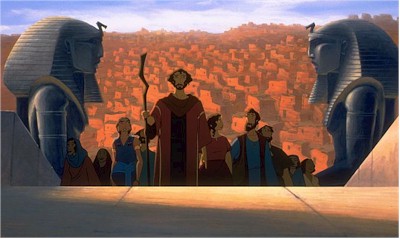
After +10 years of a break, I watched the animated movie The Prince of Egypt again. I remember clearly when and where I saw it the first time; my cousins received the VHS (or was it DVD?) as a Christmas present and we watched it two or three times during the holidays. I was already borderline "too old" to like cartoons anymore because it wouldn't be considered "cool" for someone in my age back then, but secretly I really liked it. Now, I could watch it in the original language and on top of that, could understand some of the Hebrew spoken in the movie - and love it openly regardless of age. :-)

The story of the Exodus is especially important now as Passover is nearing. The holiday commemorates the events around the freedom of the ancient Israelites from slavery in Egypt. Moses as the leader, lead the people to the promised land that would flow with milk and honey. If you're not familiar with the events that lead to the celebration of Passover, watch the movie. While some artistic liberties have been taken to make the story work on the silver screen, the 600 religions experts used during the movie make sure that the underlying facts are respected.

I have been involved in Passover celebrations in 2011 and 2012. The first time, I barely had a clue what was going on. Second time around, the experiences from the first time were immensely valuable for me to make a good impression. Stay tuned to see what happens in 2013...

http://robsmovievault.files.wordpress.com

Tuesday, March 12, 2013

Northern Star #2

Remember my earlier post about the Star of David featured in Helsinki architecture?

Today, I came across with another example on Pursimiehenkatu street! I wonder what is the history behind this building? It has worked for over 130 years as emergency housing for those in need, but I can't find any facts on the architecture or why these stars are decorating the facade of the building...

Jewish symbolism in Helsinki architecture. I wonder how many I can find...?

Monday, March 11, 2013

Nomen est omen

The Latin proverb that got the honor of serving as this post's header is something I sometimes believe in. The name is an omen. The RMS Titanic sank – after all it was named after the gods that were overthrown by a better race in Greek mythology. Titanic nor the Titans lasted to see the future. Or what about the Finnish football team called Atlantis? Needless to say, they declared bankruptcy and nowadays have disappeared and are never to be found, much like their more famous namesake island.

Jewish names, both first names and family names are a very interesting topic for anyone interested in etymology and history. This is where the nerdy part of this post begins, so stop reading unless you really are interested :). There is the most obvious source for first names: Biblical writings. Abraham, Jacob, Adam, Noah, Ruth, Sarah, Deborah... All familiar names even to the Christians. On a more general note, nearly all names that have an ending -el can be traced back to the Hebrew language: Daniel, Gabriel, Michael, Raphael... Other common first names used by the Israelis or Jews have a more simple explanation in the Hebrew language.

There is a superstition in Judaism (especially among the Ashkenazim) that you must not name a child after a living relative. The Angel of Death might confuse these two persons carrying the same name – and accidentally grab the new-born from here to eternity. And by the way, how is a Jewish naming ceremony of a baby since there is no baptism or Christening? For boys it is at the brit milah ceremony (circumcision, at the age of 8 days) and for girls at a ceremony in a synagogue.

There is a trend among the Jews returning to Israel that they change their change or translate their last name of more foreign origin into Hebrew. Sometimes the Hebraization of the name is very literal: Abrahamovich (the -ovich/-owicz/-owitz ending meaning “son of” in Slavic regions) becomes Ben Avraham. The famous Israel Prime Minister David Ben Gurion chose a more of a free styling change for his name: Gryn became Ben Gurion. Some chose a more thorough road and abandoned their old name altogether, and started using e.g. Ben-Artzi, meaning “son of my land”.

(Mind you, a similar trend aspired in Finland during the 1800s when independence was still a dream – but a desire for a Finnish nation lived among the people. Many people with a Swedish last name changed or translated their last name according to whatever circumstances the family had. Even I would be called Eriksson nowadays if there hadn't been a switch by my great-great-grandfather.)

Many of the Ashkenazi Jews have a very German-sounding last name. Only three family names are of pure Jewish origin to begin with (Cohen, Levi and Israel). But as most did not have a family name but were merely called the son or daughter of someone, the German and Austro-Hungarian empire that in the 1700s imposed the Jews living in the region to adapt a last name... There are beautiful examples of e.g. Edelstein (“precious stone”), Rosenthal (“rose valley”) to more humble names such as Klein (fine, it means “small” but is associated a big fashion house nowadays) or Fisch (needs no translation). You can't judge a person by their last name though: not all German names mean that the person is Jewish. The Sepharic Jews had, by the way, adopted the use of family names much earlier.

Those going through conversion to Judaism usually adapt a Hebrew name for themselves. Traditionally, males pick Abraham and females Sarah. These names are favored because Abraham is quoted in the holy book to be “the father of a multitute of nations” (= hence, he can be the father of a convert having a totally non-Jewish background) and Sarah was his wife. Not everyone goes with the flow, of course. Madonna is known as Esther, and Marilyn Monroe never revealed which Hebrew name the Rabbi gave her from the Bible. My first name would not need much Hebraization: change one letter and there you have it...

This post is merely a scratch on the surface of the interesting world of names. If you're interested to learn more, dig in at behindthename.com, for example.

Friday, March 8, 2013

A museum visit in Sweden

As discussed before, one of the first things I do when visiting another city is to check if there's a Jewish museum in town. This time, I get to add Stockholm - the capital of Sweden - to my list of Jewish musems visited. Heja Sverige!

Located in the beautiful area of Vasastaden, the museum isn't something you would come accidentally across with. Compared to the fellow museums in Paris or New York, where there's a whole building dedicated to the cause, the museum in Stockholm is in more humble settings - downstairs a typical apartment building. You need to ring a bell to get in, and be aware of the opening ours (12:00-16:00 daily, except for Saturdays of course).

But don't worry, once you're round the corner, the signs will lead you there.

The museum has a permanent exhibition that is the size of a large livingroom. It presents the basics of the Jewish faith as well as some Swedish aspect to Judaism. You get your classic introduction to Torah and the Jewish holidays, but also family trees of Swedish-Jews and a small shrine to Raoul Wallenberg. There are also authentic memorabilia from the Holocaust, provided by the survivors. The Red Cross of Sweden arranged the so-called "White Buses" (army buses painted white) after the WWII ended and transported 30.000 survivors of the concentration camps to Sweden. Around 10 000 of them were Jews.

A long time since I saw a mezuza somewhere else than at my home. And first time I could actually read something in Hebrew when visiting a Jewish museum!

Barbie converts to Judaism? Not quite, but there were miniature doll settings of Jewish holidays (a wedding chuppah and sukkot), as well as artifacts used in Passover and Hanukkah.

A smaller room is dedicated to exhibitions with changing themes, and when I visited the theme was Jesus Christ Super-Star. Well, not quite, but Jesus the Jew anyway. It was a kind attempt to bridge the gap between Judaism and Christianity with the one thing that both connects but separates the two religions. There were artifacts from exclavations from Jesus' times, and points how Jesus was a Jew. Even his "golden rule" in the New Testament is actually just a borrowed mindset from the Old Testament.

A false prophet or the son of G-d, the man that creates controversy even after 2000 years...
Today, the Jewish population in Sweden is estimated to be around 20.000, half of them living in Stockholm or the nearby region. In Stockholm, there are three synagogues with conservative and orthodox services. And of course, let's not forget the small gift shop of the museum, where I bought the below article. It replaced my old Sex and the City movie "Love" key chain replica. The message stays the same, though!

Ahava.
A nice museum visit all in all! Convenient and compact, but I must say that my command of Swedish language came handy - not all the information was available in English too. And a small tidbit that also the Finns will recognize: the gherkins & pickles, ketchup etc. branded Felix that you find in every supermarket here --- well, a company founded by a Jewish immigrant in Sweden!

Wednesday, March 6, 2013

This blogger's mind-boggler

I can't remember where I picked up this little book of whys, but it is a pretty efficient, straight-to-the-point declaration on matter relating to the Jewish faith.


The first "why" question, in the first chapter, explains the fact that why the religion of the mother is the primary factor in determining if a child is Jewish or not. I'm pretty sure I've discussed this topic before in my blog; how Judaism only considers those born from a Jewish mother as Jews. You are considered non-Jewish, if your mother is non-Jewish. Doesn't matter if your dad is a rabbi, you're still not among the chosen ones.

This rule was established because of a pretty simple reason (here comes the why). One can be sure who gave birth to a child - but of the father you can never be sure. Or to say the least, in some circumstances it can be questioned. Fine, nowadays we have those mail order DNA tests and all that to help you if you're in doubt, but back then for the Jews, perhaps just a teeny tiny bit suspicious by their nature, the mother was the 100% source of Judaism and this remains until today.

So, us shiksas out there, out here. Anything that would crawl out of our foreign loins would never be considered Jewish. But here comes the catch: if I did have kids with a Jew, the kids would be entitled to receive Israeli citizenship. And even my children's children would still have this birth right.

This is where the confusion begins. Israel, the state established for Jews, historically based on Zionism, is willing to grant its citizenship just-like-that to someone that officially, according to the real, religious rules isn't even Jewish. My little book of whys does not answer my question why is this and how this contradiction persists.

One could argue back that not all Israelis are Jews. And this is true. While Jews are the majority in the country, there are minorities of Arabs/Muslims, Druze and Christians. Therefore, you might catch an Arab with an Israeli passport at the airport. But no "outsider" Christian or Arab would be granted the citizenship without ifs or buts and allowed to do aliyah, unless their would prove one of their grandparents being Jewish (the Orthodox Jews would probably add here, that it would have to be the maternal grandmother - if any). And we come back to the matter of one having a Jewish bloodline.

And yes, shiksas can convert. Someone might point out here that even the first Jews ever were converts. But Judaism is not something you can just go and be 100% , is it? Same thing if I convert, I'd always be Christian by background. If I lived in Switzerland for 20 years and got citizenship, I'd still be Finnish under the surface. Nationality and religion are something more profound, something you're born into. Political ideologies e.g. communism doesn't know this kind of so-called restrictions. One can be a 100% communist regardless of where they come from. But can a convert-Jew ever be considered 100% Jewish? This is probably a matter of opinion...

When it comes down to it, Judaism and Israel are more than just a plain religion or a plain sovereign country. They are like Siamese twins, so grown together that you can't separate the one from the other. There are two heads thinking independently: the Jewish one thinking in religious terms and the Israeli one tuned into a more secular mindset. Somehow, though, they need to co-exist, because both without one another, would be way worse off.

Saturday, February 23, 2013

Want more?

Here is a couple of my favorite websites. Topics and news on Israel and Judaism. Just sharing them with you, in case my blog isn't enough, ha ha!

The Times of Israel - my all-you-need-to-know what is going on in Israel. The daily e-mail newsletter keeps me updated. News and mostly other formal stuff. But check out blogger


Monday, December 10, 2012

Let there be light

It is not at all a bad idea for Jews to celebrate Hanukkah, also known as the Festive of Lights, this time of the year. Fine, it wasn't really tailor-made for the Finnish latitudes - but most definitely would brighten things up around here, too.

When thinking of Hanukkah, you know, in my life BB (= Before Boyfriend), it is again kind of funny how many things Jewish I used to know were thanks to American TV shows. I vividly remember an episode of OC where the Cohens celebrate Christmukkah, or how Ross on Friends explained to his son Ben about the Maccabees while wearing his infamous holiday armadillo costume. Is this - seriously - where I (and probably some others too) base their knowledge on? Dangerous..!

Well, anyway, Ross was right. It is about the Maccabees beating the bully-Greeks and regaining control of the Temple. The Temple had been defiled by foreign malpractice and the Maccabees decided to purify it by burning oil in the Temple's menorah for eight days. But to their disappointment, there was enough oil left only for one day. What do you do in this kind of situations? Well, all you need is a miracle, and so, the light burned for the necessary eight days after all.

Hanukkah isn't (apparently) religiously so important in Judaism but has become a popular past-time anyway. The way I have got acquainted to it is actually by the dreidel, meeting the Finnish hillomunkki's Jewish relative sufganiyah and now more recently tasting some delicious home-made latkes (potato pancakes). Coincidentally enough fried in what else than oil - there's plenty of that going around this time of year!

Latkes, lamb and some Israeli wine. Yum!

And pssst, a very observant pair of eyes spotted a hanukkiyah in my neighborhood...

Friday, November 30, 2012

Spinning and winning!

Anyone who has watched the TV series Sex and the City too many times, might remember a song that went like this...

...Oh dreidel dreidel dreidel
I made it out of clay
Oh dreidel dreidel dreidel
The dreidel shall I play...

Taking a little jump start to Chanukah, a while ago I played with the dreidel for the first time ever. I was playing against a very experienced opponent - someone who has celebrated Chanukah every year of his life. And me? Never.

Neither of us (!!), however, knew the rules to this game. Thanks to my Dreidel App, it didn't take much time to figure out how the game works. Dreidel is a spinning top with rectangular edges. Each side of the four sides is equipped with letters (gimel, hei, shin and nun) belonging to the Hebrew alphabet. The words they mean come from Yiddish.

all = ganz = ג 
half = halb = ה
put in = shtel arayn = ש
nothing = nisht = נ
  
Each player gets a certain amount of game tokens, which can be e.g. coins or raisins. We used jellybeans. A game pot is created by each player putting a token in the middle of the table - and then the spinning begins... Depending on the letter you end up with on your turn, you either get all that is in the pot, half of it, add one token to the pot or get nothing.


Trust me, the game can go on for a while. But it was fun! Who could have believed that two nearly 30-year-olds would spend a Monday evening playing with this little simple toy. My wooden dreidel was in heavy use to find who's the winner - and it was me who lost both rounds. Next time around, now that I have learnt professional techniques like spinning the dreidel upside down, my goal is to clean the pot.

Friday, November 16, 2012

Meet me at the synagogue

A couple of weeks ago I visited inside a synagogue for the first time. Even though I have seen a couple of them in Israel (peeked inside one of them) and walked by the one in Helsinki, I never had actually been inside any synagogue before.

The name synagogue comes from the Greek word  "sinagogi" which means to get together or assemble. Compared to Christian churches, synagogues often are quite modest or normal-looking buildings and do not necessarily feature any religious symbols on the outside. No bell towers, high rooftops, crosses (or in this case Star of David) are necessarily visible. But the synagogue is full of interesting little details, if you know where and what to look!

The Portuguese Synagogue in Amsterdam dates back to 1675 and was built for the Sephardi Jews who migrated to the North from Spain and Portugal because of the inquisitions. It is actually the center of a bigger complex: the synagogue is surrounded by buildings (that include e.g. a library, treasure chambers, a gift shop:) and forms an inner court together with them.


There was no service - or no one else inside for that matter when I entered the synagogue. The inside is quite modest with wooden floors and benches, but there are beautiful chandeliers hanging from the ceiling. No wonder that thousands of candles are burnt here every year. The candles weren't lit this time, but one of the chandeliers has ner tamid (the eternal flame) burning - just like in the Temple of Jerusalem back in the day.

Women's balcony on the left, supported by the columns. Eternal flame is burning opposite the Herchal (the Ark in the back wall).

As any Orthodox Jewish synagogue, there is a separate seating section (up on the balconies) for women with own entrance. One of the Ionic columns supporting the balconies is slightly fractured - a deliberate imperfection that is placed in all synagogues in the memory of the destruction of the Temple. The separate seating arrangement for the different sexes is somewhat unfamiliar to me - but I have once seen a similar setup in a Christian church, too.

Ladies only!
The buildings around the synagogue include many interesting places, and some of them are protected by the Dutch law as they are considered the country's heritage. Like for instance, the treasure chambers...

The collection also includes valuable cloths and fabrics in addition to these beautiful silver objects.

And for the first time, I saw in real life a mikveh (or more familiarly in English known as a bath) that is used for ritual cleansing in Judaism. For converts, it also resembles the final stage of the conversion process when the person walks in the water and immerses, re-born, as a Jew.


The Portuguese Synagogue forms an interesting historic, Jewish cultural sight in Amsterdam. Not only is it possible to visit the synagogue itself, the surrounding lower buildings add a little extra to the experience. I have not listed everything here, so go have a closer look yourself if you have the chance and see all the things this complex has to offer...

Thursday, August 23, 2012

Lost in translation

Since I got into the language topic in my previous post, I thought I'd write some more about it.There are two languages that can be associated with the Jewish people. First, there is age-old Hebrew – the language we know the First Testament was written in. Then there is Yiddish, evolved from a cocktail of languages in Central Europe around the 10th century. Yiddish also uses a Hebrew-based alphabet but interestingly enough, it is not an official language in Israel: Hebrew and Arabic are.

When learning about Judaism or talking with Israelis, you quite often run into words that can't be translated. You just need to know what they mean. I am not entirely sure from which language these words come from, but there are a lot of them.

To name a few examples... Menorah does not translate to candlestick. Mezuzah is not a doorpost case. Yarmulke/kippah is not a small hat. Hamsa is not a hand. Kosher is not fit/permitted. Rabbi is not a priest. Shiksa is not a non-Jewish female. Ke'ara is not just a plate. Mikvah is not just a bath and freier is much more than just a loser. All of these items, people or concepts need to be referred to with their original word – they just don't translate into your local language. The original words carry so much more meaning than any other foreign word could begin to describe.

In Finnish, we also have words like that. But I can only think of two at the moment: sisu and perkele.

I've had quite a hard time memorizing what everything means and there are plenty more words out there. But I am getting there. One day I will ask my boyfriend to throw me a pop-quiz on these special words. I'll let you know my score.

Mind you, to make things a little more interesting, Israelis often swear in – yes – Arabic! Just see the below example by Natalie Portman...