Showing posts with label history. Show all posts

Tuesday, September 10, 2013

Northern Star #3

Not only in random buildings in Helsinki, the familiar Magen David can be found in an old Finnish bank's savings box. Länsi-Suomen Osake-Pankki was established in 1912 and merged into other banks in 1929. This means the savings box was made some time between 1912-1929.

Sure, spotting this star in Finland might not have any deeper meaning than just being a star - but I find it funny anyway :-).

Your coins are safe here!

Sunday, March 17, 2013

Tuning in for the season

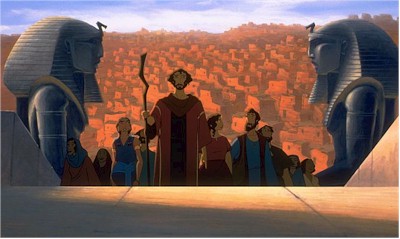
After +10 years of a break, I watched the animated movie The Prince of Egypt again. I remember clearly when and where I saw it the first time; my cousins received the VHS (or was it DVD?) as a Christmas present and we watched it two or three times during the holidays. I was already borderline "too old" to like cartoons anymore because it wouldn't be considered "cool" for someone in my age back then, but secretly I really liked it. Now, I could watch it in the original language and on top of that, could understand some of the Hebrew spoken in the movie - and love it openly regardless of age. :-)

The story of the Exodus is especially important now as Passover is nearing. The holiday commemorates the events around the freedom of the ancient Israelites from slavery in Egypt. Moses as the leader, lead the people to the promised land that would flow with milk and honey. If you're not familiar with the events that lead to the celebration of Passover, watch the movie. While some artistic liberties have been taken to make the story work on the silver screen, the 600 religions experts used during the movie make sure that the underlying facts are respected.

I have been involved in Passover celebrations in 2011 and 2012. The first time, I barely had a clue what was going on. Second time around, the experiences from the first time were immensely valuable for me to make a good impression. Stay tuned to see what happens in 2013...

http://robsmovievault.files.wordpress.com

Monday, March 11, 2013

Nomen est omen

The Latin proverb that got the honor of serving as this post's header is something I sometimes believe in. The name is an omen. The RMS Titanic sank – after all it was named after the gods that were overthrown by a better race in Greek mythology. Titanic nor the Titans lasted to see the future. Or what about the Finnish football team called Atlantis? Needless to say, they declared bankruptcy and nowadays have disappeared and are never to be found, much like their more famous namesake island.

Jewish names, both first names and family names are a very interesting topic for anyone interested in etymology and history. This is where the nerdy part of this post begins, so stop reading unless you really are interested :). There is the most obvious source for first names: Biblical writings. Abraham, Jacob, Adam, Noah, Ruth, Sarah, Deborah... All familiar names even to the Christians. On a more general note, nearly all names that have an ending -el can be traced back to the Hebrew language: Daniel, Gabriel, Michael, Raphael... Other common first names used by the Israelis or Jews have a more simple explanation in the Hebrew language.

There is a superstition in Judaism (especially among the Ashkenazim) that you must not name a child after a living relative. The Angel of Death might confuse these two persons carrying the same name – and accidentally grab the new-born from here to eternity. And by the way, how is a Jewish naming ceremony of a baby since there is no baptism or Christening? For boys it is at the brit milah ceremony (circumcision, at the age of 8 days) and for girls at a ceremony in a synagogue.

There is a trend among the Jews returning to Israel that they change their change or translate their last name of more foreign origin into Hebrew. Sometimes the Hebraization of the name is very literal: Abrahamovich (the -ovich/-owicz/-owitz ending meaning “son of” in Slavic regions) becomes Ben Avraham. The famous Israel Prime Minister David Ben Gurion chose a more of a free styling change for his name: Gryn became Ben Gurion. Some chose a more thorough road and abandoned their old name altogether, and started using e.g. Ben-Artzi, meaning “son of my land”.

(Mind you, a similar trend aspired in Finland during the 1800s when independence was still a dream – but a desire for a Finnish nation lived among the people. Many people with a Swedish last name changed or translated their last name according to whatever circumstances the family had. Even I would be called Eriksson nowadays if there hadn't been a switch by my great-great-grandfather.)

Many of the Ashkenazi Jews have a very German-sounding last name. Only three family names are of pure Jewish origin to begin with (Cohen, Levi and Israel). But as most did not have a family name but were merely called the son or daughter of someone, the German and Austro-Hungarian empire that in the 1700s imposed the Jews living in the region to adapt a last name... There are beautiful examples of e.g. Edelstein (“precious stone”), Rosenthal (“rose valley”) to more humble names such as Klein (fine, it means “small” but is associated a big fashion house nowadays) or Fisch (needs no translation). You can't judge a person by their last name though: not all German names mean that the person is Jewish. The Sepharic Jews had, by the way, adopted the use of family names much earlier.

Those going through conversion to Judaism usually adapt a Hebrew name for themselves. Traditionally, males pick Abraham and females Sarah. These names are favored because Abraham is quoted in the holy book to be “the father of a multitute of nations” (= hence, he can be the father of a convert having a totally non-Jewish background) and Sarah was his wife. Not everyone goes with the flow, of course. Madonna is known as Esther, and Marilyn Monroe never revealed which Hebrew name the Rabbi gave her from the Bible. My first name would not need much Hebraization: change one letter and there you have it...

This post is merely a scratch on the surface of the interesting world of names. If you're interested to learn more, dig in at behindthename.com, for example.

Sunday, February 10, 2013

Divas, monsters and music!

The time of the year is getting closer... Yeah, yeah, yeah! All the countries in Europe are digging into their national talents to find the perfect, unheard, cheesiest euro-trashpop song to bring home gold in the annual Eurovision Song Contest!

Finland has made its choice and goes to Malmö, Sweden this year equipped with Krista Siegfrids, who is desperate for you to marry her. Check out the video below... Can you spot influence from Katy Perry, 80's Madonna, maybe a dash of Carly Rae Jepsen? I actually quite like it!


Finland has won the Eurovision Song Contest just once since joining in 1961. It happened in 2006 in Athens, when don't-ask-me-where-they-came-from Lordi won the contest with back then records points. Hard Rock Hallelujah rocked Europe and found its way to my iPod, too. I remember that night well when I was in a nightclub and towards the end of the contest, the DJ stopped playing, people stopped dancing, someone turned up the TVs, people gathered around the screens to stare in awe and amazement - is this really happening? It did - and needless to say Hard Rock Hallelujah was played non-stop for the remainder of the night. Never ever had Finland received douze points from so many countries!

Israel has been a bit more successful that Finland in this musical battlefield. They joined the contest in 1973, and have won a total of three times. The most memorable one of the winners is by far Dana International with his her Diva performance in 1998. The 70's were Israel's golden era though when they won twice in a row.

Finland has many years been very confident about succeeding in the contest, but more often than that we've come in last place, sometimes missing qualification and next year's contest even. Those with the money are always in (the UK, Spain, Germany and France) and those with good neighbors are guaranteed with success. Yes, certain blocks for voting have been formed - and Finland is highly discriminated in its own block. The other Nordic countries rarely vote for us, even though we quite diligently always remember to grant at least Sweden some points. For example, Greece and Cyprus can rely on each other, Ireland and the UK favor one another and the Warsaw pact (Poland, Belarus, Ukraine, Russia, Armenia) always pull through for each other.

Despite the contest being called Eurovision, many non-European countries participate. Israel is a good example of this. I have not noticed Israel belonging to any voting block, so, maybe Israel and Finland should establish one? The Edge Countries Axis? :-)

Wednesday, January 30, 2013

B-10197

I could not believe my eyes when some days ago I saw a familiar face on TV. It was about a half a decade ago when I came across in my back-then neighborhood with an old man who had a story to tell. B-10197 was tattooed on his arm. He was an Auschwitz survivor.

Screen shot of the documentary. Courtesy of YLE.

Recently, Mayer Franck (1928-2012) crossed my mind quite often. I was wondering if his story had properly been documented in Finland, and whether he was still alive or not. The documentary movie on TV answered my first question, and Google the second.

What happened to Mayer is pretty unbelievable. Was it luck, persistence, God's will or what, but he survived and pulled through every twist and turn in the plot. Mayer was 11 years old when he was forced with his family to the Lodz ghetto in Poland. His father died (doctor refused to mend him if there was no pay in food - the family had none to give) and mother and two sisters were put on the first train to Auschwitz. Mayer escaped this scenario, hiding in a sewer. He never believed the stories that those who got on the train, were given a sack of potatoes and were headed for better conditions.

The ghetto was being emptied in quite a hurry, and at some point Mayer and a couple of his friends built a secret annex (much like the Frank family in Amsterdam). At daytime, they were hiding in the annex and at night searched the streets for food and cooked whatever they found on a small stove. One day when the Germans were searching their hiding place, one of the officers noticed the stove was warm. He noticed a hutch attached to the wall and pushed it aside, revealing the boys' hiding place. They were put on a train and sent to the place where "you must say goodbye to your wife and kids, everyone goes to heaven". It was summer of 1944.

Upon arriving at Auschwitz, Mayer was put in the line on the right. He was inspected, and sent to work. Every day at roll call, Mayer pinched his cheeks and stood on his toes, in order to appear healthy and sturdy. One day he was picked to go work for a German company to shovel sand. A hopeless task, especially when winter came and the ground froze.

In 1945, there came an order to evacuate the camp. Germans marched the prisoners, walking and walking for hours that felt like eternity. One morning, after the group spending the night in a barn, Mayer hid in the hays. There was a search and a poker brushed his back, but he dug his way deeper in the hays. Those who were found hiding in the barn, around 12 of them, were shot dead on the spot.

Mayer waited the whole day in the hay, and at night continued the journey on his own. A friendly old couple at a homestead accommodated him. The Totenkopf visited the house, but didn't capture him.

The war came to an end, and Mayer went to one of the Red Cross's camps. He had no ID, no photos, nothing. His whole family was dead. He returned back to the ghetto. A place that was buzzing with 250.000 people was now empty. Mayer went to live at an apartment that used to belong to a friend's family.

The family's late mother's brother, who lived in Helsinki, came to the ghetto looking for relatives. He found Mayer and took him to Finland. Mayer was 18 years old. In Finland, he kept working in fur business, a business he had learnt when working in the ghetto.

You would have never believed that this man had been through hell and lived to tell about it. He had a certain glimmer in his eyes, a smile, a positive attitude and always up for a chat. Sometimes he would offer sweets or chocolates, just out of kindness.

Mayer died on the 13th of May, 2012 in Finland. On that day, I was in Israel, preparing to go to Jerusalem. May he rest in peace.

Monday, December 17, 2012

The 300 of Finland

As I have now finished reading even more books on Holocaust, understanding it actually becomes even more difficult. Controversies, paradoxes, complexities are constantly unwrapped the deeper you dig. One of the most interesting – at least for the Finns – is the case of the 300 Finnish soldiers fighting for their country during the Continuation War against the Soviet Union in 1941-1944.

So, what makes it interesting? These 300 were Finnish Jews. And what makes it even more interesting? Simultaneously as these 300 were protecting the independence of Finland, 220 000 German soldiers were sent to Finland. They fought side by side. The tragic stories of what is happening in Poland and the rest of Europe to Jews had spread to Finland as well. It is no wonder that these soldiers felt a little uneasy finding Wermacht soldiers in the tent next door.

An accident waiting to happen, then? Actually, no. The Jewish soldiers built a synagogue amidst the battles. They were given Saturdays off so all the Jewish soldiers, also from the nearby area, could ski to the synagogue for service. They were given Yom Kippur off to celebrate the most important Jewish holiday. All this – under Germany's eyes.

agricola.utu.fi

 How many synagogues were built - not destroyed - in the German battlefields? This was probably the only one.


Quoting one of the soldiers when a German officer asked him how this was possible, ”in Finland there is freedom of religion, I was born in Finland, raised in Finland, went to Finnish schools and have a duty as a citizen to protect my country when my country needs me”. The German officer said back to him ”I'm no SS, personally I have no problem with Jews”, and they both went on fighting their battles.

Afterwards, these 300 soldiers have been called fascists by other Jews. But the way the saw the situation, just like the Christian Finnish soldiers was that there was no alliance with Germany and they were fighting for the freedom of Finland and not a religious war – citizenship and religion are two separate things. And just as a remark for some rebellion from these Jewish soldiers: they did not greet the Germans. Also, three of these 300 received a German Iron Cross, from Hitler, as an honour for great acts of bravery – but none of them accepted this token.

It is admirable of these 300 to fight for Finland. If the Soviet Union had won, the whole of Finland would have suffered. If Germany had won, only they would have suffered. They concentrated on protecting the whole of Finland. Is that patriotism or what? They made a movie about the 300 soldiers in Sparta... What about a movie about this? Steven Spielberg, are you listening? :)

Monday, October 22, 2012

The apple fell far from the tree

I have always lived under the impression that since Christianity is a ”spin-off” from Judaism, there must be some underlying similarities between these two religions. Something that binds together, something fundamentally shared. In reality, it is actually a lot easier to list differences between these two religions than find similarities. Basically, Judaism is based on what Christians call the Old Testament, while Christians have built their their belief, for the most, on the guy called Jesus or Christos, Ancient Greek for ”the anointed”.

Let's take traditional, religious festivities. The Jewish celebrations and holidays honor the stories of Israelites: Passover, Sukkot, Hanukkah. Yom Kippur is also stated in the Old Testament, and neither Rosh Hashanah (Jewish New Year) nor Purim can be found in the Christian calendar. Needless to say, Christmas and Easter - Christian holidays that commemorate the life of Jesus - mean nothing to the Jews in return. And I don't blame them. I've read before that these two holidays were originally pagan anyway, and ”disguised” in the Christian faith by the Roman Catholic Church in order to convert more pagans. Easter was an old fertility festivity (Eggs, fertility? Coincidence?) to the goddess known as Eostre (=Easter). Christmas was an old celebration for winter solstice. But Passover, for example, is accounted in the Bible and most likely the Last Supper of Jesus was a seder dinner, too.

dorinny.com
That is perhaps where the whole difference culminates. Whereas Christianity is about G-d and his alleged son, for Jews Jesus was a mere false prophet. It is interesting how Christianity boasts about virgin birth and resurrection, while fellow Jews living during the same times write a totally different story about this man. According to them, Jesus is the result of an adulterous affair between a Jewish mother and a Roman soldier, and he studied black magic in Egypt. You will not find these descriptions in the New Testament.

This brings us to another disagreement between these two religions. Both are considered monotheistic, meaning there is only one G-d. In Christianity, though, the Holy Trinity is taught in the name of the Father, Son and the Holy Ghost. According to this, there is just one G-d but is constituted in these three persons. I personally find this hard to believe, as Jesus of Nazareth is proclaimed has a historic person, an individual. Therefore he cannot be an incarnation of one deity, one G-d?

I apologize if I sound negative towards Christianity, but it does seem that many habits in Christianity are artificially made. OK, the divine word is filtered through human beings anyway, so no wonder it has become secular and there's room for error. But it still is absurd to blindly believe that 25th of December is Jesus' birthday when historians think he was born in September and the Bible itself gives no confirmation on an exact date or month. And especially for the Finns out there: Northern European pagans celebrated ”Yule”, birth of Mithras, the pagan god of the sun, on the shortest day of the year. Yule = joulu. Rest assured, I do not want to deny anyone of the spiritual guidance or comfort they might find in Christian habits and teaching. To me, ”joulu” has been long dead anyway (ever since presents stopped coming ;), and there's just one God, no trinity.

PS. Dear Cousin, if you are reading this, I have discovered new-found respect and interest to the field of study you chose for yourself back in the day. Kudos! :)

Sunday, October 21, 2012

Treblinka: Chil Rajchman's story

After recently rediscovering the Finnish libraries' vast book collections, I used particular search words to find books to read. Chil Rajchman's name came up, the title of the book liberally translated is ”The last Jew of Treblinka”.

I have to admit, I didn't know where Treblinka is. A lot of Ukrainian guards are mentioned, so I would have guessed somewhere there. But according to Google Maps, it is located somewhat East of Warsaw, Poland. A remote, forgotten piece of unfruitful land that Himmler decided to turn into a factory of death. The earth there was literally spitting up blood, as it could not absorb all the bodies buried in mass graves.

This map screenshot is courtesy of Google Maps.

Chil Rajchman's memoirs from this extermination camp is another book written in blunt, honest, straight-to-the-point way. Chil was born in 1914 in Poland. His mother died just before the war, and the only one of his family, in addition to himself, to survive the war was his brother, who managed to escape to the Soviet side of Poland. What happened to his father or youngest sister will never be known. Another sister was dead after 24 hours of her arriving together with Chil at Treblinka in 1942.

Like Shlomo Venezia (whom I wrote about previously), Chil was chosen out of thousands of men arriving at the camp and put to work. Again, to strip and dispose of the bodies. First, he sorted out the luggage and clothes left behind by those who were gassed to immediate death. He found among the mountains of clothes his sister's dress, and cut off a piece of it to keep with him until it all was over. Then he was a barber, cutting off women's hair before they entered the chambers. Then he was moved to carrying bodies once the doors of a gas chamber were opened and a mass of human corpses melted together rolled out. Afterwards, he worked as a dentist, pulling out golden teeth out of the corpses' mouths. Bodies needed to be burnt in open bonfires, so no evidence would be left behind.

This was the routine at the Treblinka camp. It was purely for the purpose of killing. No one transported there came there to stay, but were marched off to death immediately. The guards were called murderers, and at its worst, the trains carried 15 000 Jews there daily. Estimates between killed people at this site range from 700 000 to 900 000. An incomprehensible number. It is like sweeping out the whole capital region of Finland in a matter of a couple of years.

How did Chil manage to escape? Inspired by the riots in Warsaw, the men at Treblinka arranged their own riot. Most were killed during this brave attempt, but a handful survived – Chil among them.

After the war, Chil moved to Uruguay, married and had three sons. Until his death his memoirs were not published but only read by family members. His wish was to let the world know what was done to Jews during those horrendous, dark years in European history. That's why I wanted to write about the book here, too.

Tuesday, September 25, 2012

Prinsengracht 263

The Amsterdam address mentioned in the headline needs no introductions, and neither does a certain young girl called Anne Frank. Her diary, translated into dozens and dozens of languages, is one of the most known and read stories from WWII and the museum draws numerous visitors each day after its opening in 1960.

I had read the Diary before, but hadn't visited the Anne Frank House during my two previous short visits to Amsterdam. Third time is the charm, so dreading the long queue squirming outside the house, it was time to pay the scene of the Diary a visit.

The queue looks worse than it actually is.

The house looks on outside like any other Amsterdam house. Tall, narrow, big windows. Inside, there are steep staircases and creaking floors. But no other house hosts a certain bookcase that served as a hidden entrance to the annex of this building, which was used as a warehouse in the front - and a hiding place in the back.

The rooms in the annex are empty, left that way after Otto Frank's wishes. It is meant to symbolize the void left after all the people that never came back from the camps. The 46m2 of the annex housed eight people and for two years provided them hopes of surviving - until someone (still unknown) tipped them off. Otto Frank was the only one of them to survive. All that is left now are faded pictures of movie stars glued on the walls of the annex, and marks on the wall showing how much Anne had grown in height during these two years. Something so normal and humane, abruptly ended by something so abnormal and inhumane.

It was touching to visit the scene and think that this was the exact location where Anne had written her Diary. You get to walk the same floors, take the same stairs, see the same view from the attic. Anne's stories come to life, as you can place each resident of the annex in the locations doing their own things and chores, silently and patiently waiting for the war to end.

The House is yet another reminder and testimony of the horrific things humankind did and allowed to happen not so long ago. For those interested, I highly recommend reading the Diary and visiting the museum and witnessing this young girl's short, but powerful legacy.

Exactly 70 years ago, 25th of September 1942, Anne wrote the following to Kitty (= the Diary):
"Mouschi, the cat, is becoming nicer to me as time goes by, but I'm still somewhat afraid of her."
careysbookproject.files.wordpress.com

Monday, September 3, 2012

A museum visit in Denmark

Last weekend I had scheduled to attend a party in Copenhagen, Denmark. As the invitation was +1, we together with my significant other immidiately started planning a meet-me-half-way weekend in this Scandinavian capital. Well, these plans went to hell eventually but I did my best to include something Jewish on my agenda anyway.

Honestly, I wasn't aware of Copenhagen hosting a Jewish museum. It was by accident that I noticed it on the map when looking for the Danish Architecture Center. I've been to Copenhagen several times, especially to that area where the museum is, and I can't believe it's been there all the time right under my nose! Now it was time to visit it, but I was worried it would be closed as it was sabbath. Luckily, the doors opened at noon anyway.

Entrance to the museum is from the heavy, metal door in the back.


I was there early, and not the only one swarming around, waiting for the place to open. The entrance fee was 50DKK and you had to leave any bags bigger than A4 at the entrance. Unfortunately, it was not allowed to take photos inside the museum - but you can see some pictures at their website.

The museum presented the somewhat 400 year history of Jews in Denmark. The exhibition is divided into five different parts. First one of them being Arrivals, showing how Jews to Denmark came from various countries with very different backgrounds. The second part was Standpoints - how the only common ground for these people was in fact the religion but apart from that diversity was immense among the Danish Jews. The third part, Mitzvah, presented the story of those Danish Jews who were sent to Theresienstadt - and those who made it safely to Sweden. Traditions presented typical objects and items used in Jewish holidays while Promised Lands looks into how Denmark has become their final destination, their home.

I had a quick chat with the museum staff who were Danish students. They both had started working there this summer and said it had been busy over the past few months. Most visitors, however, are from the American cruise ships that stop for a day in Copenhagen - locals rarely find their way to the museum. Inspite of being non-Jewish themselves, both students seemed excited to work there as it somehow related to their studies.

One of the best untapped resources for shopping in almost any city is, in my opinion, museum gift shops. The shop at the Danish Jewish Museum was no exception and I didn't leave empty handed...

Supporting material for my up-coming studies - in form of a canvas shopping bag.
This duck has found its true calling.
And the gift shop's hit product: white, Magen David shaped candle holders. Here mixed with my Finnish Iittala ones.

Monday, August 6, 2012

What did Finland do?

A couple of days ago, exactly 100 years passed since the birth of Raoul Wallenberg. He is very well remembered for his brave, unselfish acts when saving 40 000 Jews during WWII. Wallenberg served as a Swedish diplomat in Hungary those days, and together with other noble-minded people granted passports for Jews so they could be rescued.

Last June when I visited the Museum of Jewish Heritage in New York City, I couldn't help but notice the praise for Denmark and the resistance there how 8000 Jews were saved and sent to neutral Sweden by sea.

And where was Finland in all this? It gives me great discomfort to learn about the actions of this country during WWII. No matter how you try to twist and turn it, Finland got blood on its hands.

Even though Finland remained democratically-ruled and was never invaded, for a moment it fought alongside Nazi Germany. The Jews who had Finnish citizenship were never subject to the mass persecution and were protected by the government, but unlike our noble neighbors, eight Jewish refugees with no Finnish passport were sent back to death. And this was eight too many.

Sure, Sweden, Norway and Denmark didn't have the Red Army breathing down their neck and trying to rip them from their independence. Some try to justify the actions of Finland by saying that the enemy of our enemy was our friend during desperate times. Until things turned sour with this ”friend” of course, and they burned our Lapland.

The Finnish Prime Minister made an official apology somewhat 50 years later. In 1971, a small group of Finnish Christians founded Yad HaShmona in Israel, naming it in the memory of these eight unfortunate people. All good gestures, but it quite doesn't change what happened.

If anyone raises this topic at a dinner table in Israel with me, I've got nothing to defend Finland with. I would bow my head in shame and sadness - saying sorry wouldn't make a difference (this could be called the Finnish guilt?). The treatment these eight refugees received pains me. It doesn't sound like the Finland I was born to. God forbid similar events ever happening again, but if it did, I hope my country would act otherwise.